Over the years, I’ve read a lot about Dharamshala and it has been on my list of places to visit. I first heard about this small town when Dalai Lama (14th) moved his residence here in 1990s. The proximity of the this town to the Himalayas was also part of the allure.. Finally.. I got the opportunity to come here last week (Feb 2025). We were in Amritsar and knew that Dharmshala is “close by”…. So we decided to visit here for a few days.
Dharamshala is a small town in the North Indian State of Himachal Pradesh, nestled in the Kangra Valley. It is at an altitude of 4780 feet ( 1457 m) in the shadows of the Dhauladhar ranges. The Dhauladhar mountains are part Shiwalik mountain ranges of the lower Himalayas and stretch about 200 Km (125 miles). Dharamshala is also a spiritual center. As the name suggests, it is a house or place of Dharma (moral & spiritual code of conduct). The town got its name from an old rest house constructed by devotees near the Bhagsunag temple for pilgrims. And the name stuck… the 14th Dalai Lama ( and the Tibetan administration) moved to Dharamshala in 1960. The town has several Hindu temples as well and has an interesting mix of Hindu and Buddhist cultures.
All this makes Dharamshala a very interesting place to visit and take in the various experiences.
Getting here .. we drove to Dharamshala from Amritsar. It was only 200 km/125 miles but it was a 5 hour drive on NH 54. The roads were terrible.. a new highway is being constructed. Our driver Saurabh (native of Kangra region) tried his best to make the drive as comfortable as possible in our Toyota Innova Crysta. We arrived in Dharamshala around 1 pm after a brief rest stop in Nurpur. The restaurant had some amazing Poori and Alu Bhaji (potato curry).
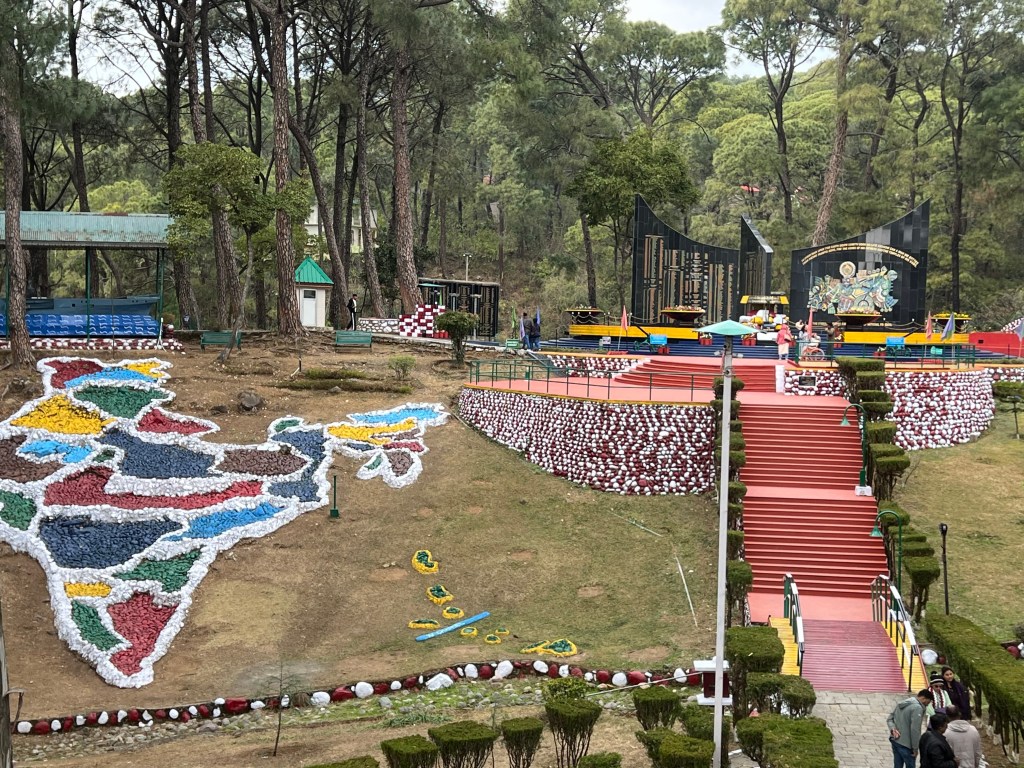
Our first stop in Dharamshala was at the War Memorial which was in the heart of town. The War Memorial is a poignant tribute to the heroes who laid down their lives in various battles fought since 1947 including UN Peace Keeping Missions. The memorial made of black stone symbolizes the courage and sacrifice of the soldiers from the Kangra region. Behind the main monument, are tall stone panels with names of the martyred soldiers etched on them. We walked around the memorial complex, took a few pictures and got back into the car to our next stop.

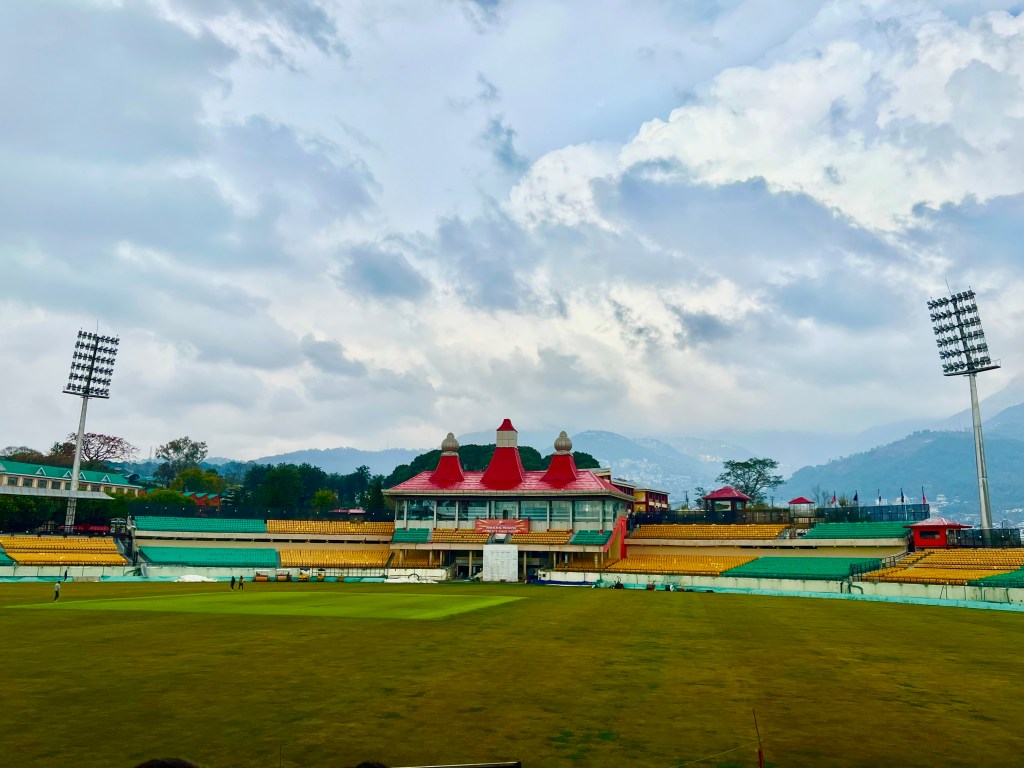
We went to the Dharamshala Cricket Ground… world’s highest stadium at an altitude of 4791 feet. Over the years, I’ve watched several cricket matches on TV that were played at this stadium. It was nice experience to walk into the stadium and see this ground in a truly spectacular setting. The mountains in the background, the colorful stands and the lush green outfield made this a treat for the eyes. I tried to capture all this as best as I could with my camera.
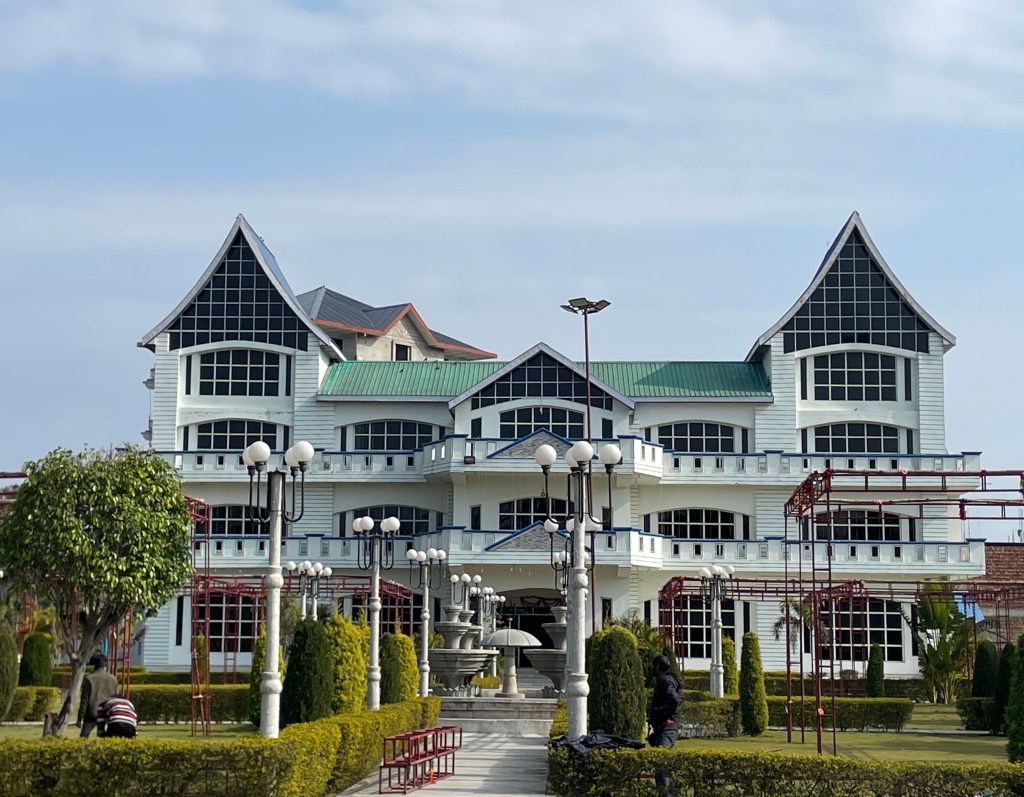
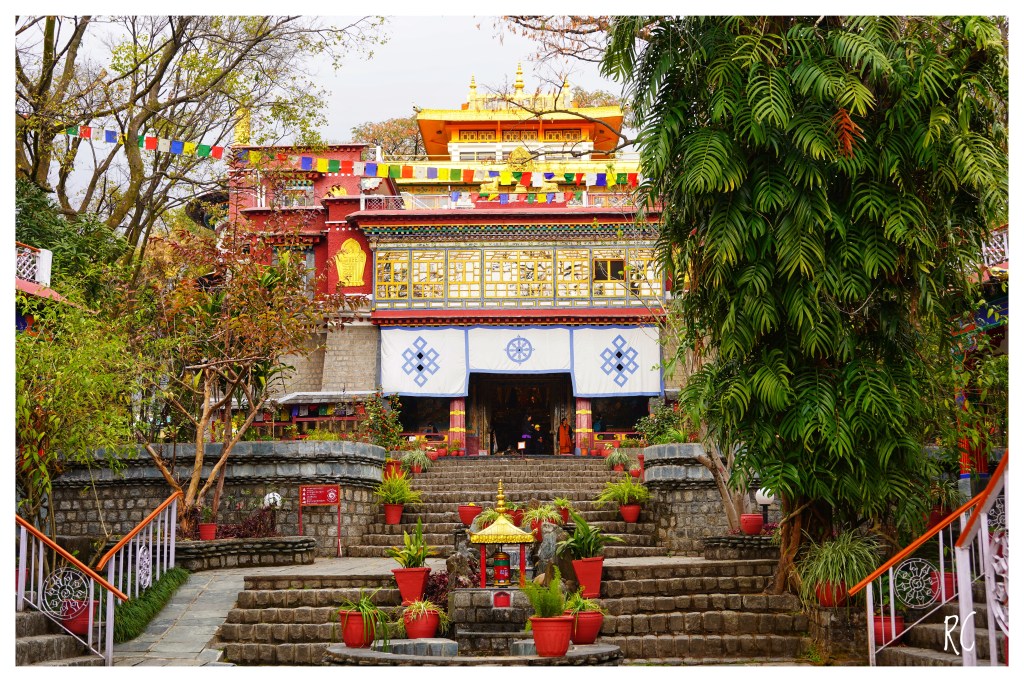
We drove from the stadium to the main attraction for the day – the Norbulingka Institute (a Buddhist center and a monastery). Founded in 1995 by Kelsang and Kim Yoshi at Sidhpur, the Insitute is dedicated to the preservation of the Tibetan culture in its literary and artistic forms.The institute is named after Norbulingka , the traditional summer residence of the Dalai Lama, in Lhasa, Tibet. The ground plan is based on the proportions of Avalokitesvara, the thousand-armed god of compassion, with the temple as the head. (Wikipedia). The monastery here makes this a religious center also. There is a beautiful exhibition room with various exhibits showcasing cultural and religious elements.
The center was very calm, peaceful and serene, perfect for relaxation and contemplation. Air was filled with the gentle gurgling sounds of the flowing water and the fountains added to the landscape. There was a gentle breeze blowing across and the afternoon Sun was peeking through the clouds. A cobblestoned walkway meanders through this beautiful enclave and leads to the Norbulingka Temple. It is called the Deden Tsuglakhang (Seat of Happiness).
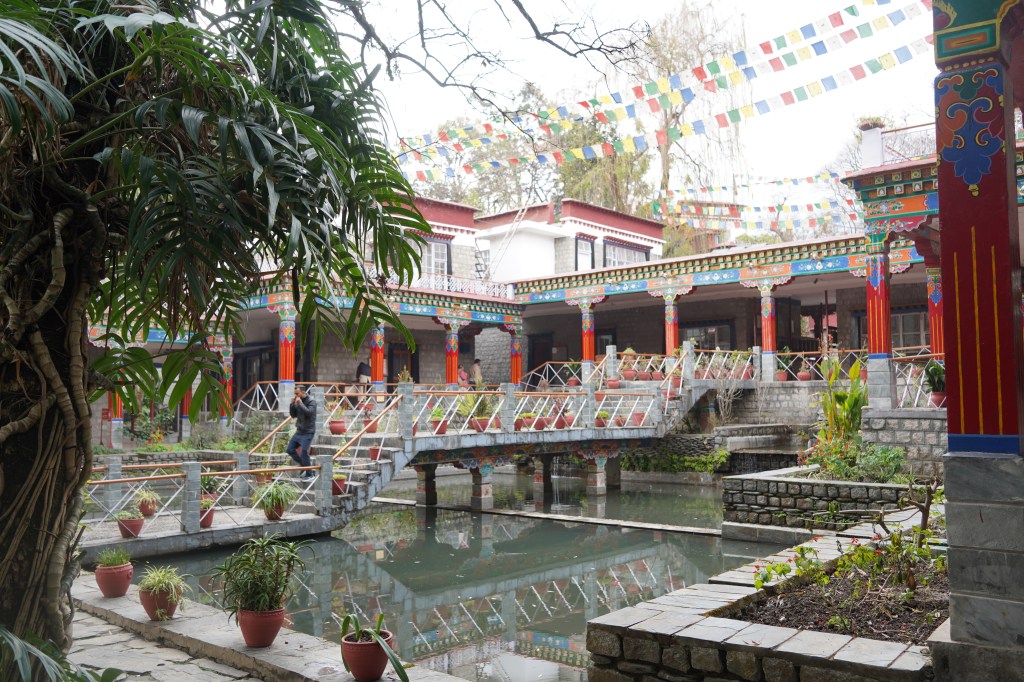
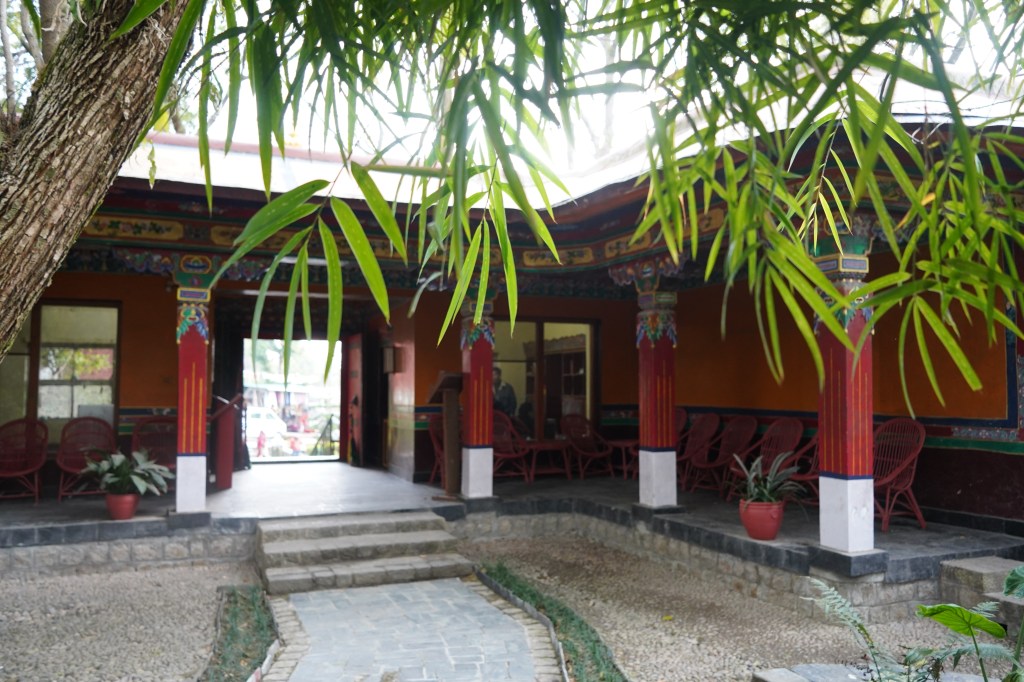
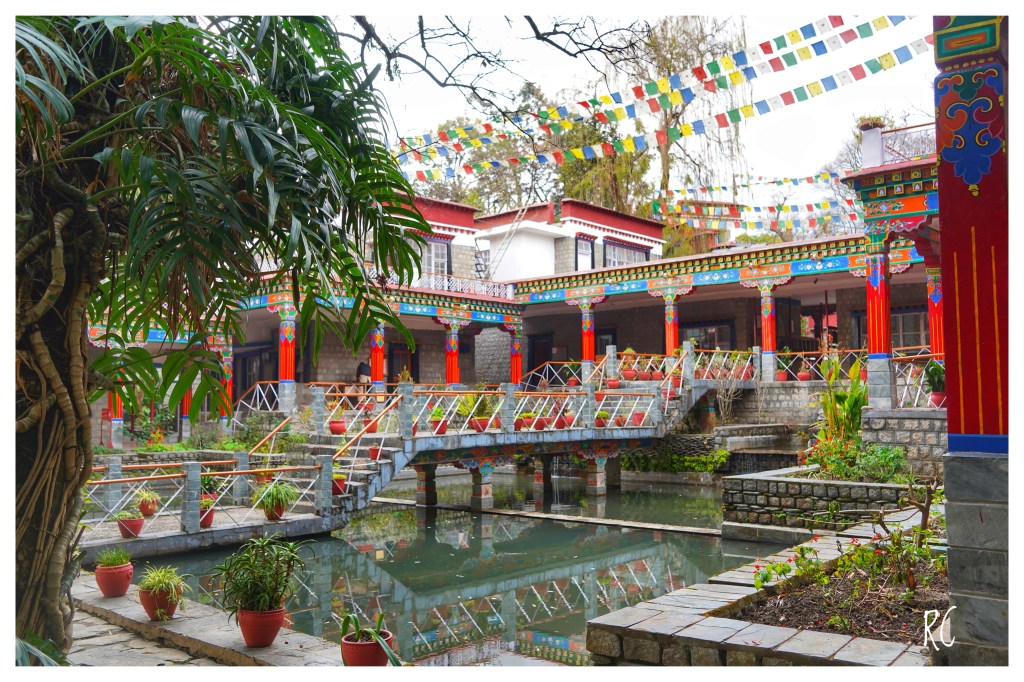
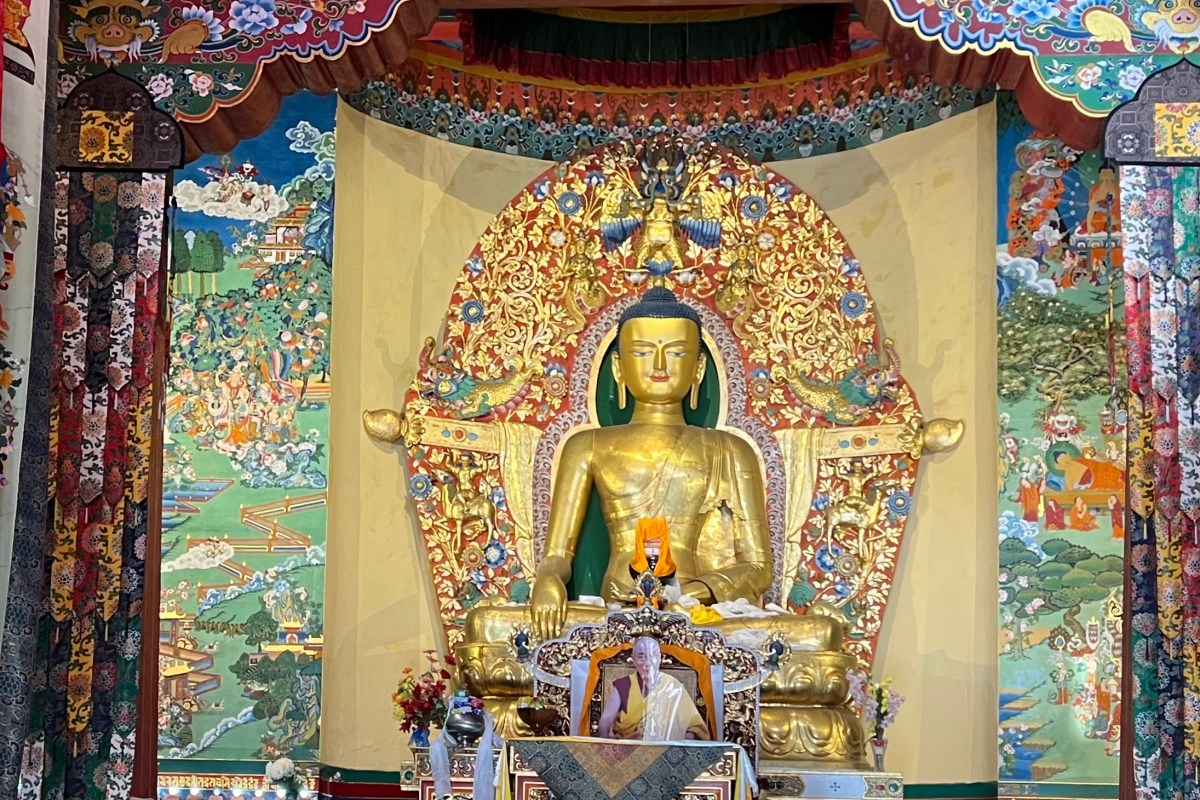
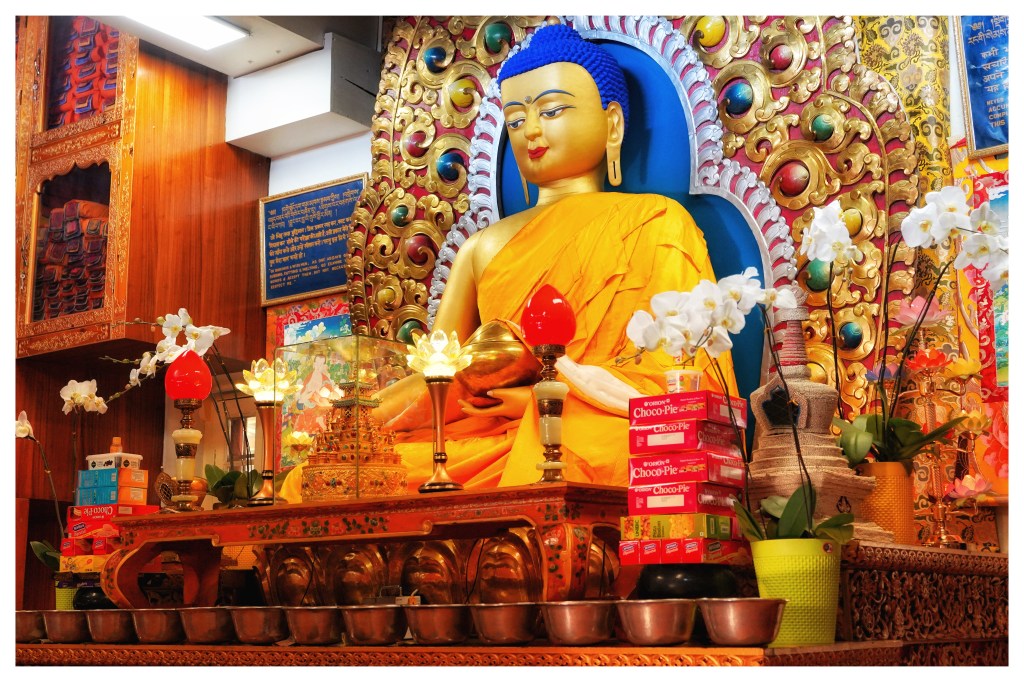
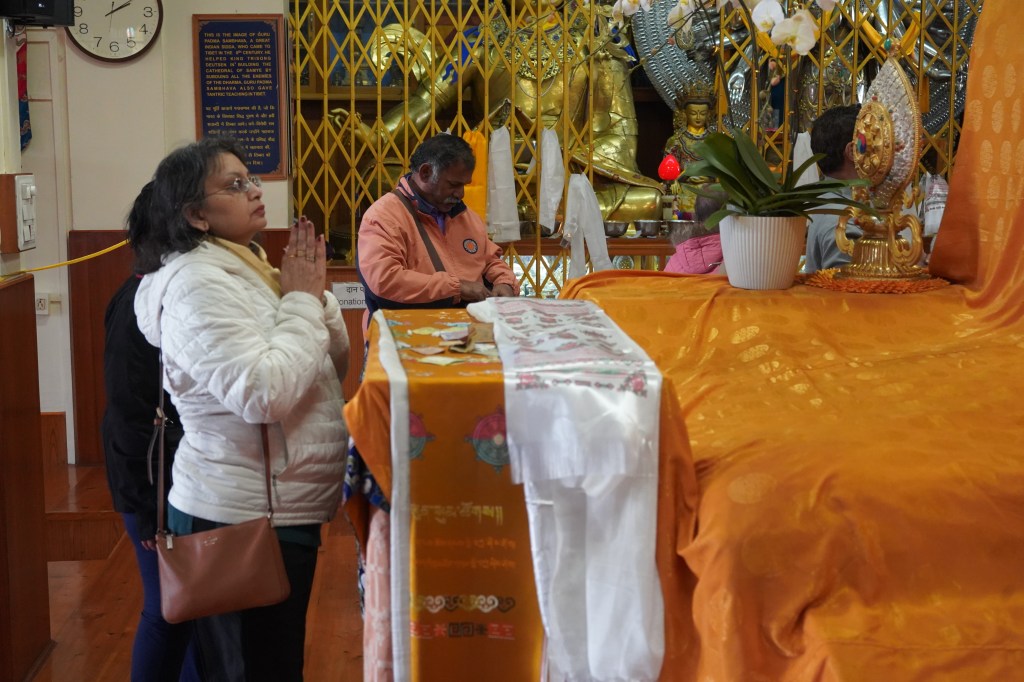
The temple is an example of Tibetan religious architecture and provides for a perfect setting for meditation and prayer. There are several elements created by Norbulingka artists – the centerpiece is a 14 feet tall gilded statue of Buddha Shakyamuni, apparently the largest outside Tibet, crafted from hand-hammered copper sheets. This statue is symbolic of the huge influence Buddha’s teachings have had on Tibetan culture. Painted behind the statue are the 12 deeds of the Buddha Shakyamuni. There are 1173 images of Buddha surrounding the temple and decorating the 44 ft high temple hall. (Source: Poster at the Temple)
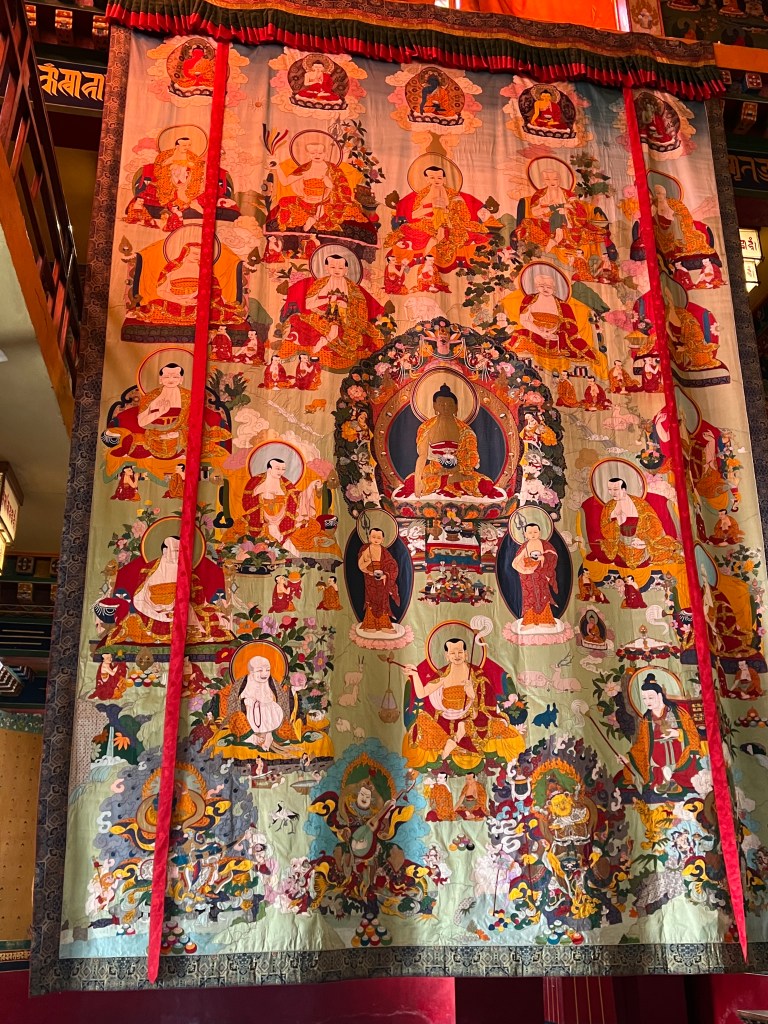
To the left of the statue, there was a large cloth hanging from the ceiling… it is a Thangka Applique is a tapestry which is over two stories high displaying the Buddha and the Sixteen Arhats (Sanskrit: “one who is worthy”): Over twenty feet tall, the applique is composed of over 20,000 pieces of silk and brocade hand-stitched by artisans at Norbulingka. In Tibet it is said, visualizing Buddha Shakyamuni surrounded by the Sixteen Arhats and an assembly of Bodhisattvas is good karma and helps develop insight into Buddha’s teachings. (Source: Poster at the Temple )

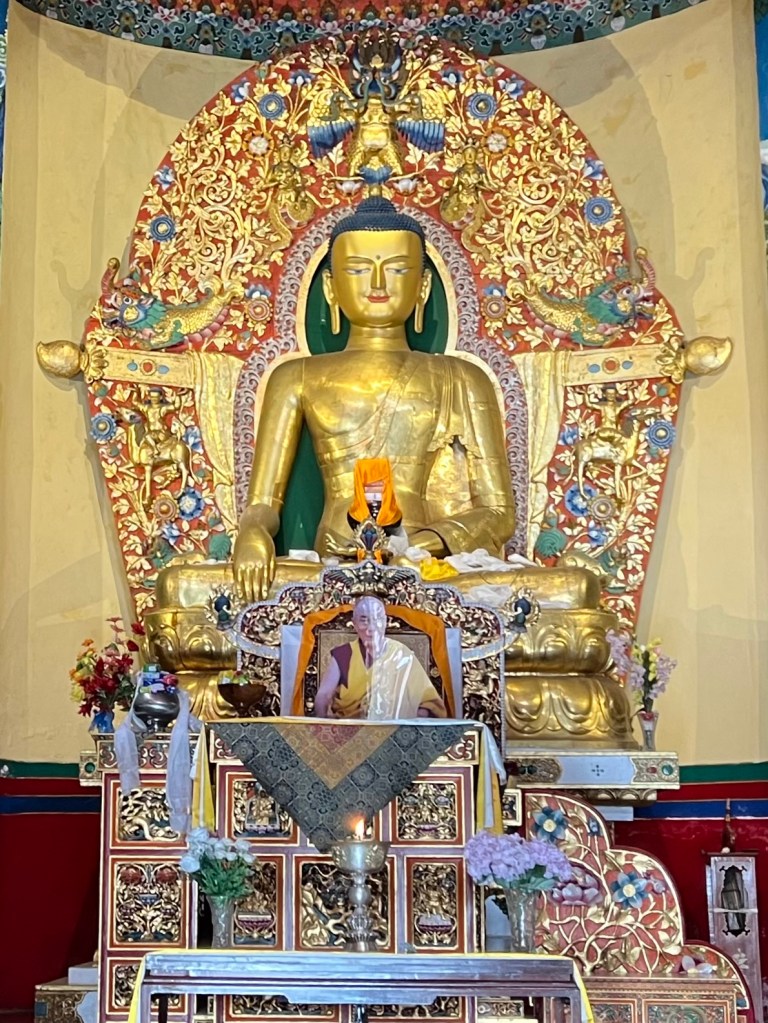
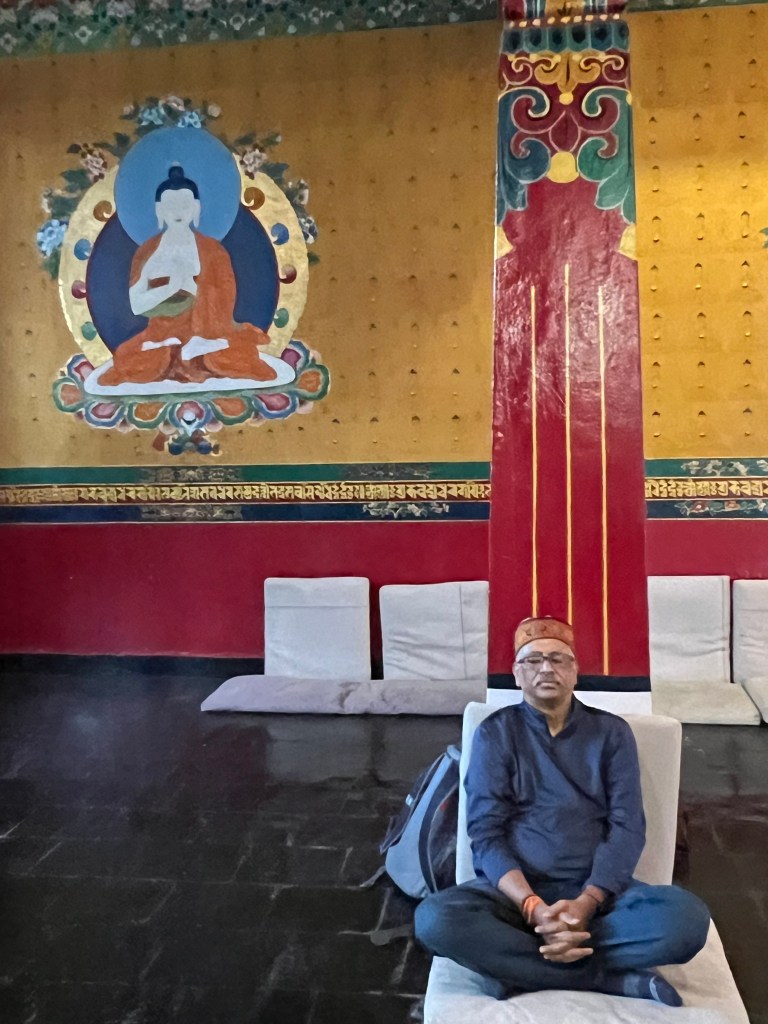
I sat down for a silent prayer and a moment of reflection – had to soak in the atmosphere and vibe of the place.
After we spent about an hour at the Institute / Temple, we left for our hotel. We checked in at the Club Mahindra Dharamshala resort and decided to have a quiet evening. It was a long day that started at 8.30 am in Amritsar. We had dinner at the restaurant in the resort. We had Thupka – a hearty noodle soup and rotis with Madra (a traditional Himachali vegetable curry).
After a restful night, we were ready for Day 2 in Dharmshala. Our driver Saurabh had a packed agenda planned for us. It was a beautiful weather day.. the sun was out and it was about 50 deg F.
The plan is to drive to McLeodganj (also called upper Dharmshala). McLeodganj is located in the Kangra Valley at an elevation of 6830 feet (2,082 M). It is known as “Little Lhasa” or “Dhasa” because of its large population of Tibetans. The Tibetan government-in-exile is headquartered in McLeod Ganj. Fun fact about the Dhauladhar Range – the highest peak is called the “Hanuman Ka Tibba”, at about 19,626 feet (5,982 m). It is named after the Hindu god Hanuman who according to legend, was said to have rested here during his journey to the Himalayas. I understand Mcleodganj is a very popular destination for trekkers.
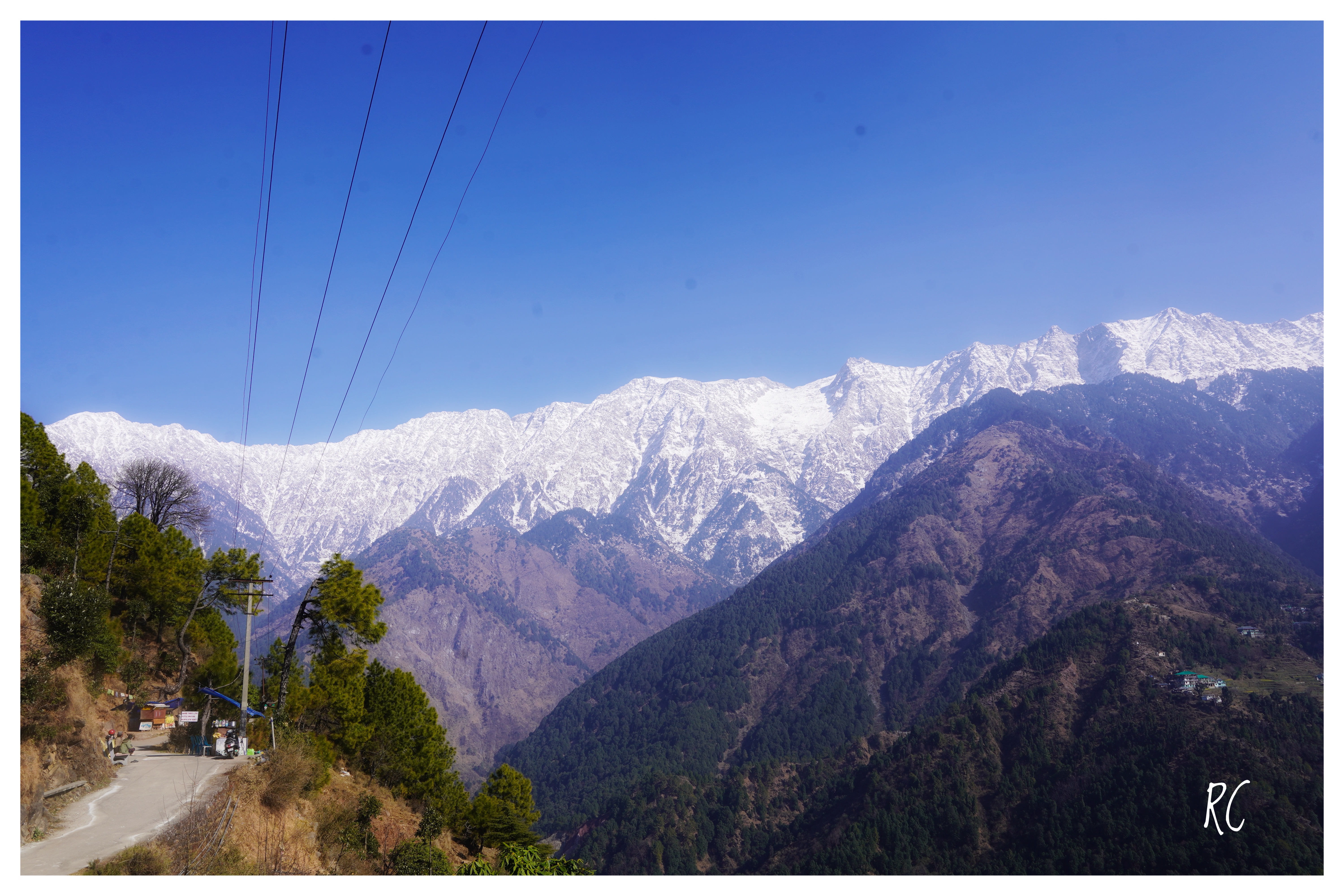
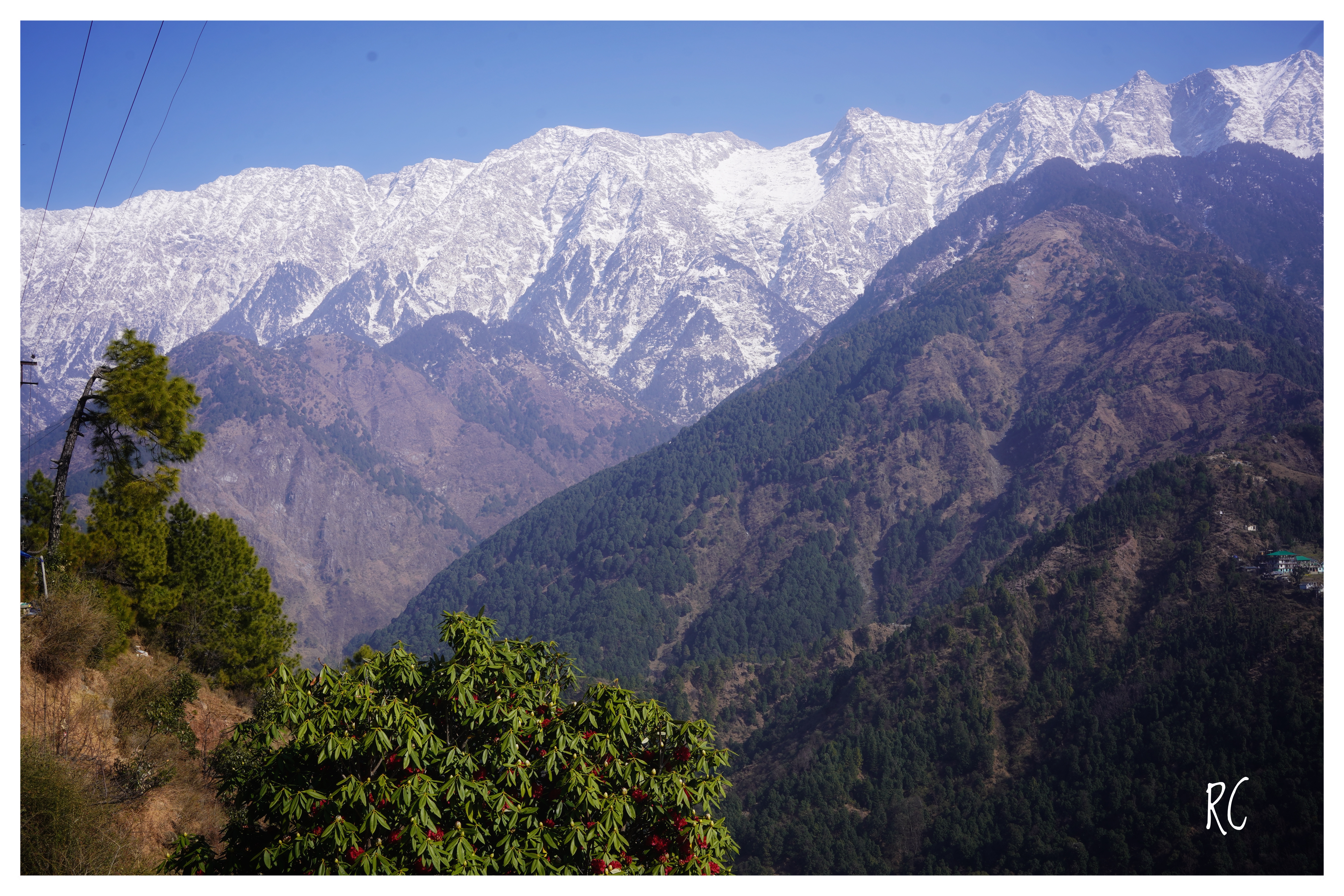
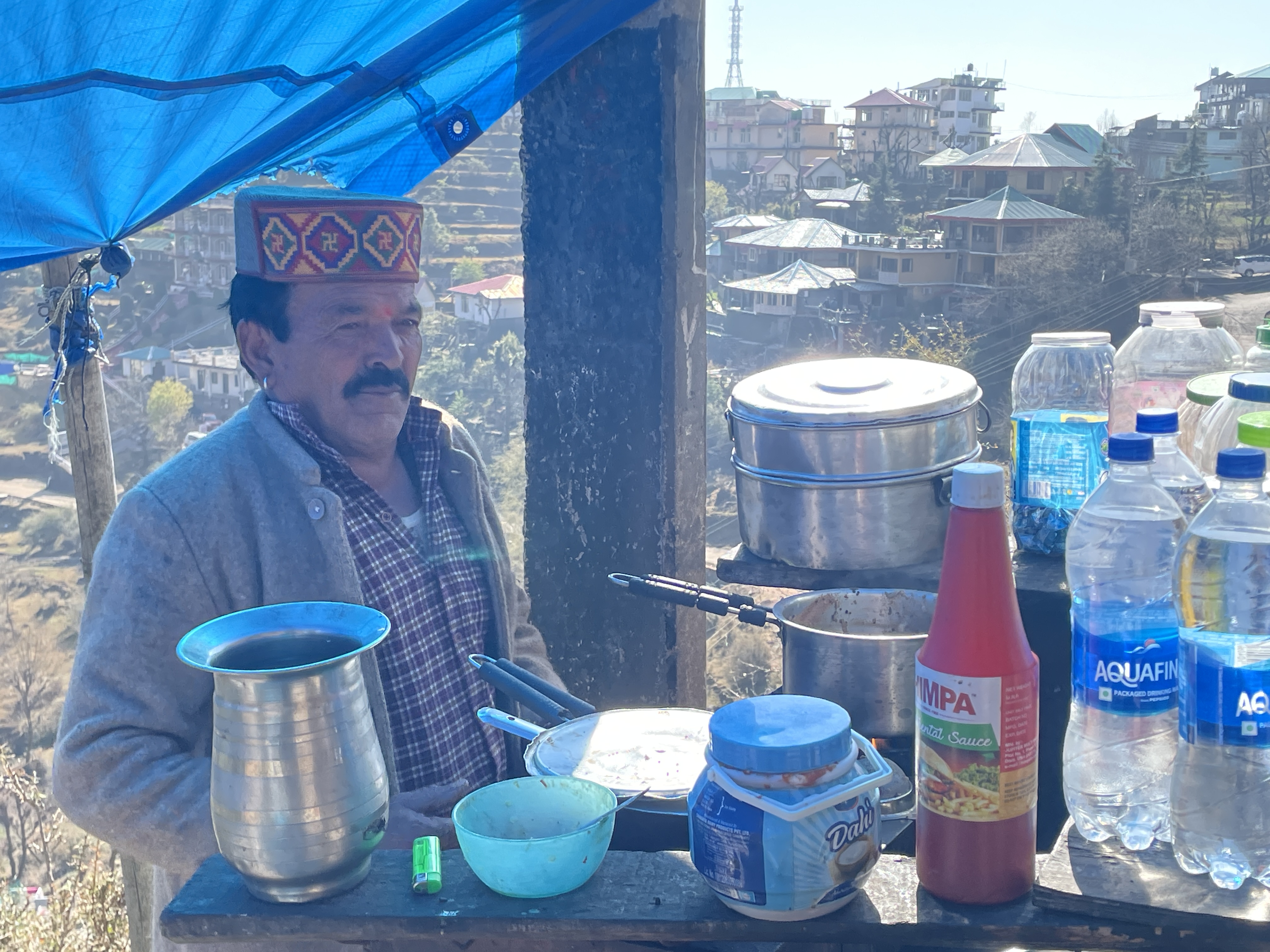
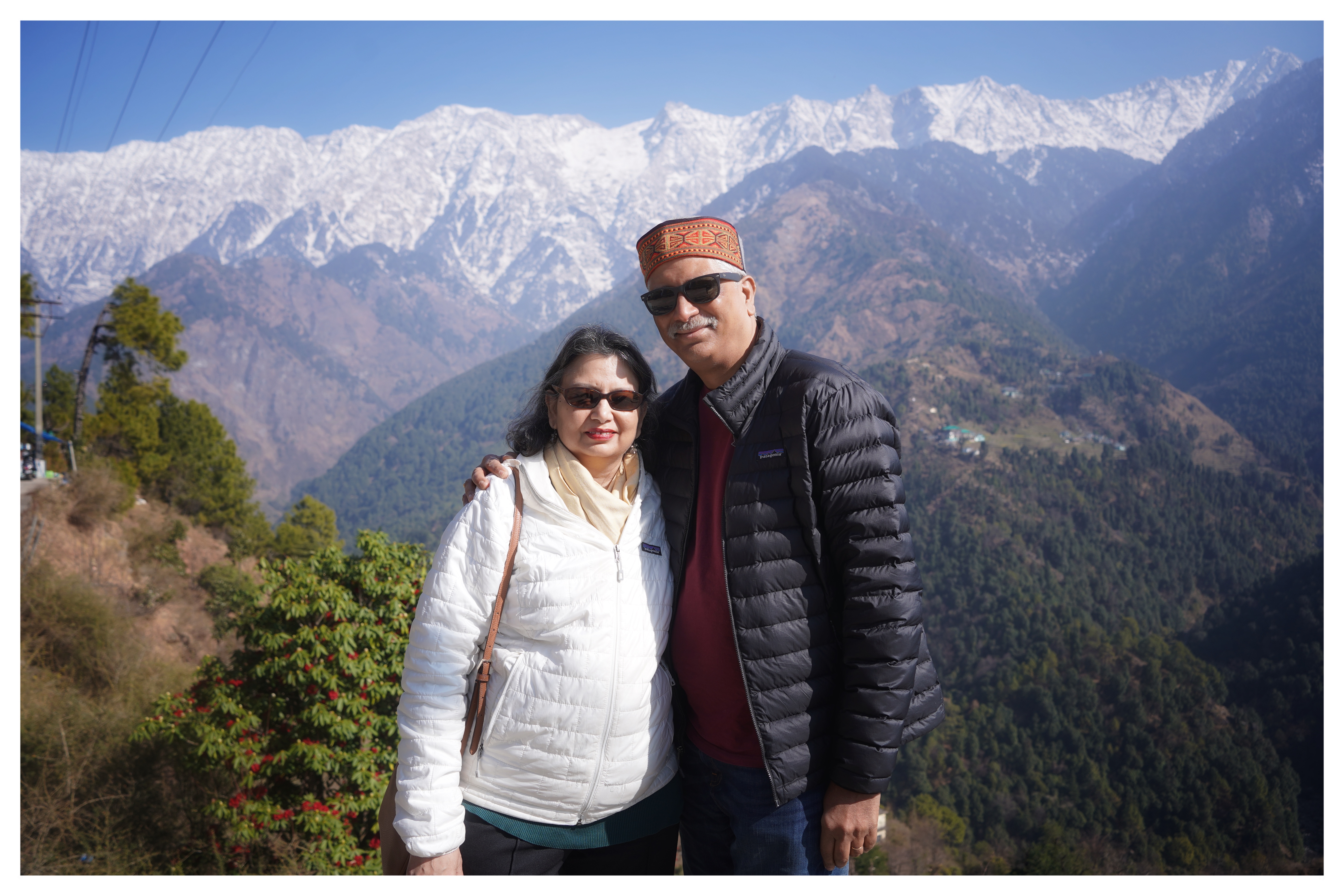
Our first stop was at Nandi Point. This is a view point offering breathtaking panoramic views of the mountains. It had snowed the last night in the mountains making the views of a landscape even more stunning. We walked around for a little bit, took a lot pictures trying to capture beauty of the scenery. We stopped by at a roadside stall for some chai – the Tau ji made very good chai (and very sweet) chai for us.
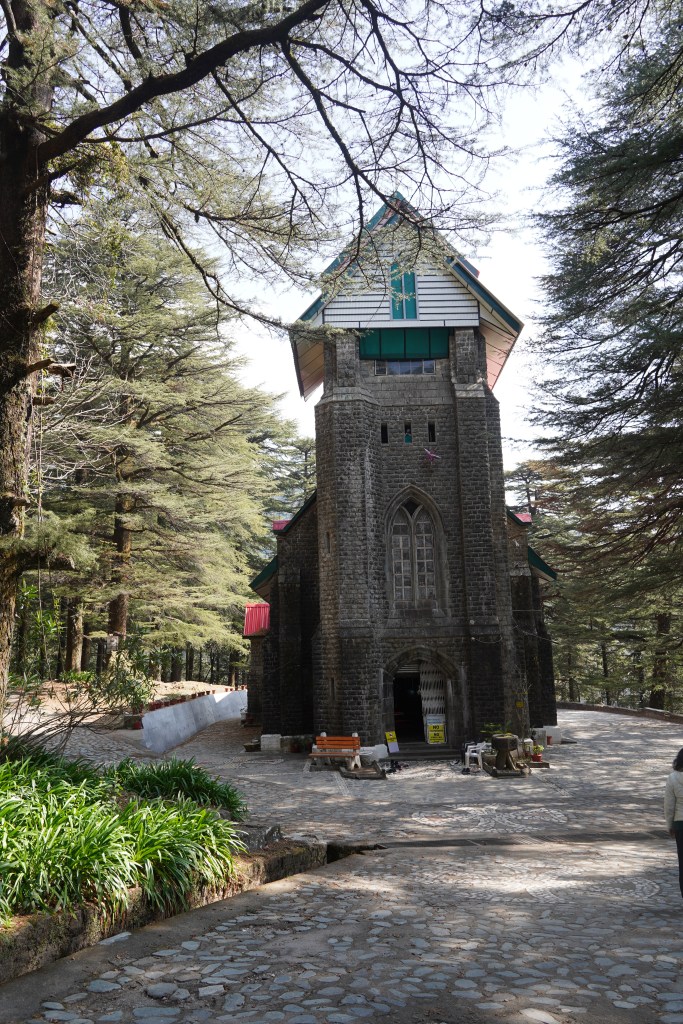
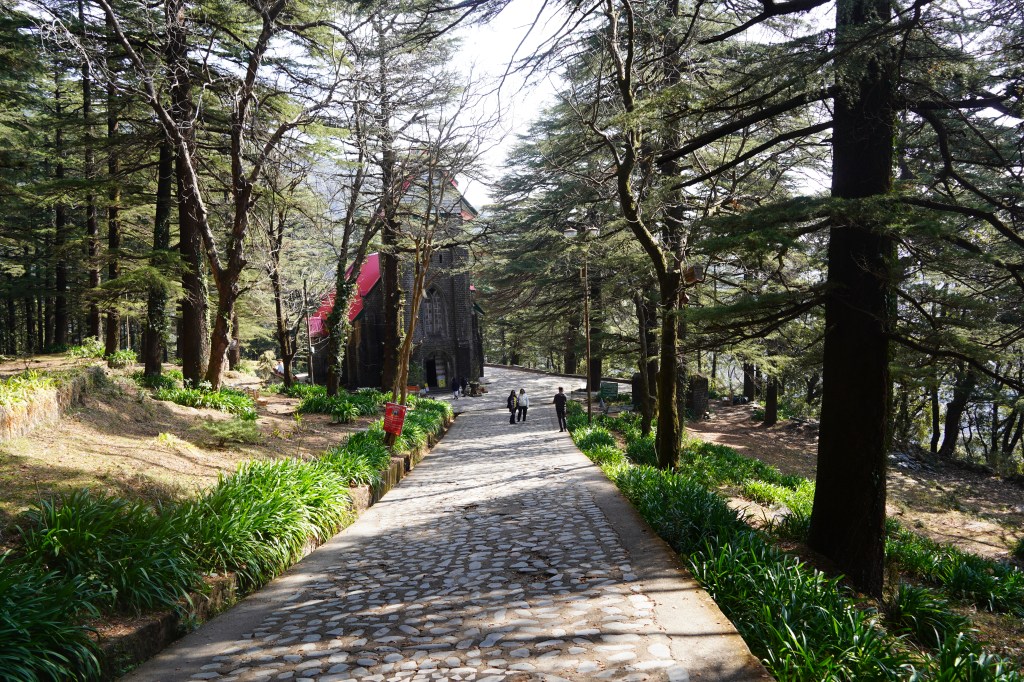
Our next stop was at the Church of St. John in the Wilderness.. a pretty odd name for a church, I thought. This is a Protestant church built in 1852 is located in a dark pine forest with lots of greenery around. There is a long cobbled walkway leading to the church. It is built in a neo-Gothic architecture and has Belgian stained glass windows. Compared to the many churches that we’ve seen around the World, this one did not really impress. There is a statue of Lord Elgin behind the statute. Lord Elgin was a Governor-General & Viceroy of India and died in Dharmshala in 1863.
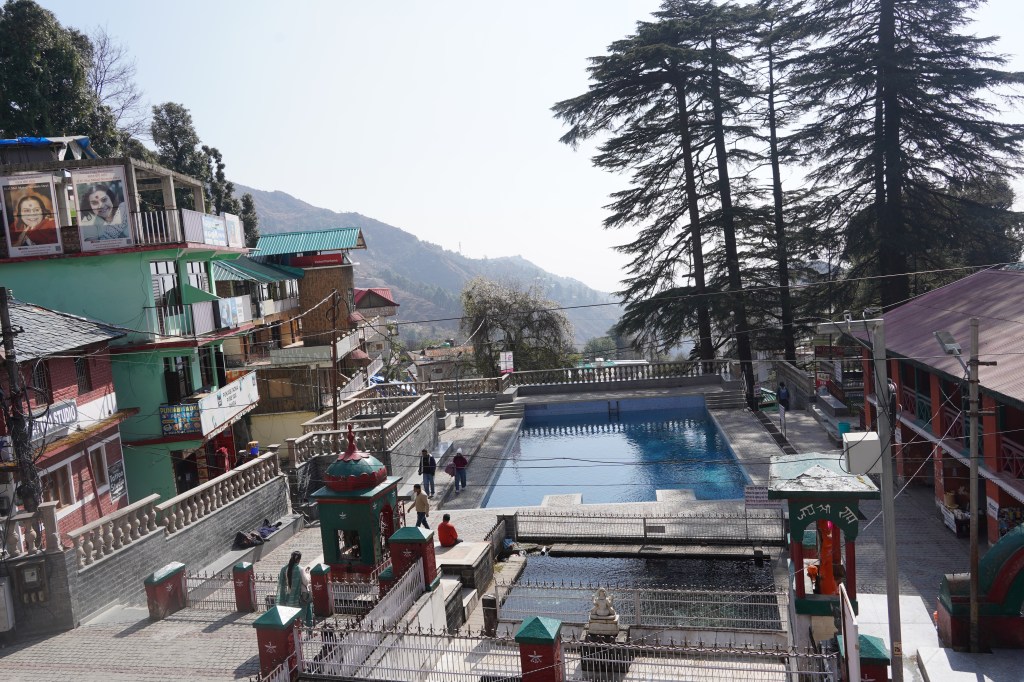
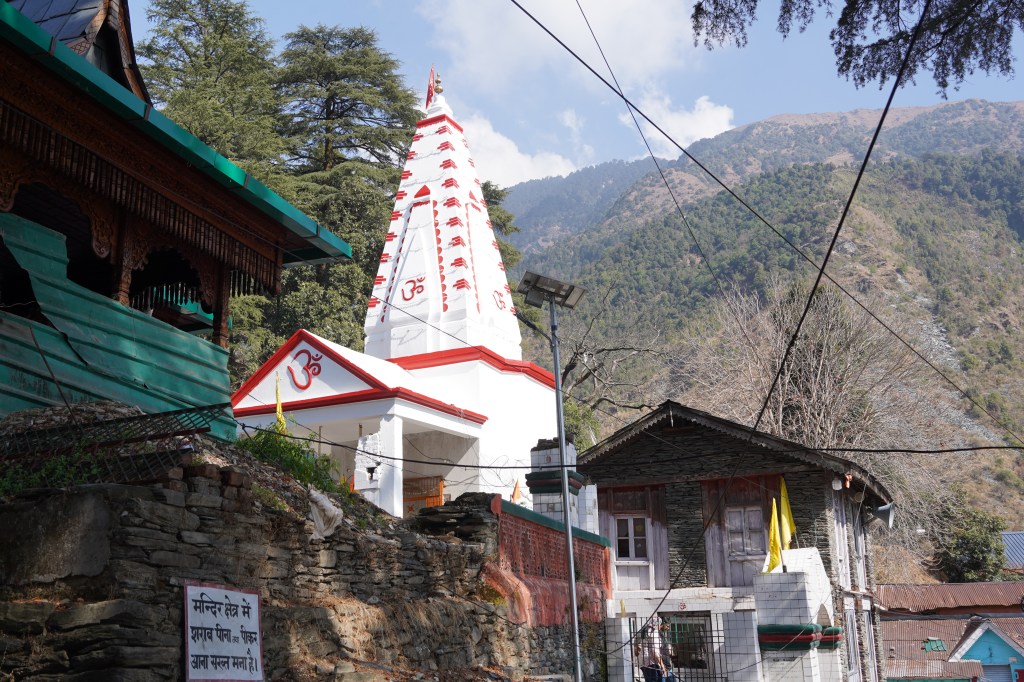
Now we were on our way to Mcleodganj to visit the main attraction of the day – the Namgyal Monastery. It was a steep uphill climb to Mcleodganj. Saurabh did a fine job driving the Innova through narrow roads and negotiated the sharp turns expertly. We arrived in Mcleodganj after a 30 min drive and made a stop in the village of Bhagsug. Saurabh dropped us here so that we could visit a famous temple in the area – the Bhagsunag (a.k.a. Bhagsunath) temple. One of most ancient temples (over 5000 years old) in the area, it is located on the slopes of the Dhauladhar mountains. It was a short walk to the temple though the market street. There are two man-made pools at the entrance to the temple where the main god is Lord Shiva. The locals consider the pools to be sacred and believe the waters have miraculous powers of healing. The temple was very small and simple structure with a very low entrance to the inner sanctorum. After saying our prayers and seeking the blessings of Lord, we walked back to market area.
Bhagsu Falls are in the vicinity of the temple but we were told that there is no water in the falls and it is best to skip this. Back in the car, we continued our journey to the Namgyal monastery – home to Dalai Lama.
The Namgyal monastery was originally founded in 1564 in Tibet. Following the Chinese invasion of Tibet in 1959, the 14th Dalai Lama and 55 monks fled to India and re-established the monastery here. As you walk towards the monastery, you’ll pass through a serene and culturally rich area that showcases the unique blend of Tibetan and Indian influences. We saw the Tibetan National Martyrs Memorial on our right and a Tibetan gift shop opposite to it. The memorial is dedicated to the martyrs who sacrificed their lives in the struggle of Tibet’s freedom.
The monastery complex (called the Tsuglagkhang Complex) which includes the main temple has a magnificent statue of Lord Buddha, a large prayer hall and a museum showcasing Tibetan art and culture. There are also residential quarters including the residence of the Dalai Lama. Above all the temple sounds as a symbol of hope and resilience for the Tibetan people. As we walked into the complex, we heard the gentle chanting of monks, the rustling of prayer flags, and the soft chatter of visitors, creating a unique and unforgettable feeling There was a sense of calm and serenity in the air.
Before visiting the main temple, we first went to the Kalachakra Temple, built in 1992. A simple hall, painted in yellow, it contains mesmerising murals of the Kalachakra (Wheel of Time) mandala, linked explicitly to Avalokiteśvara. We made our offering of the Khata (a white silk cloth) to Lord Buddha. I read that the Khata (a.k.a Khada) is a traditional Tibetan ceremonial scarf symbolizing respect, purity and goodwill offered to a deity. After our offering and a prayer, we walked around the rest of the complex.
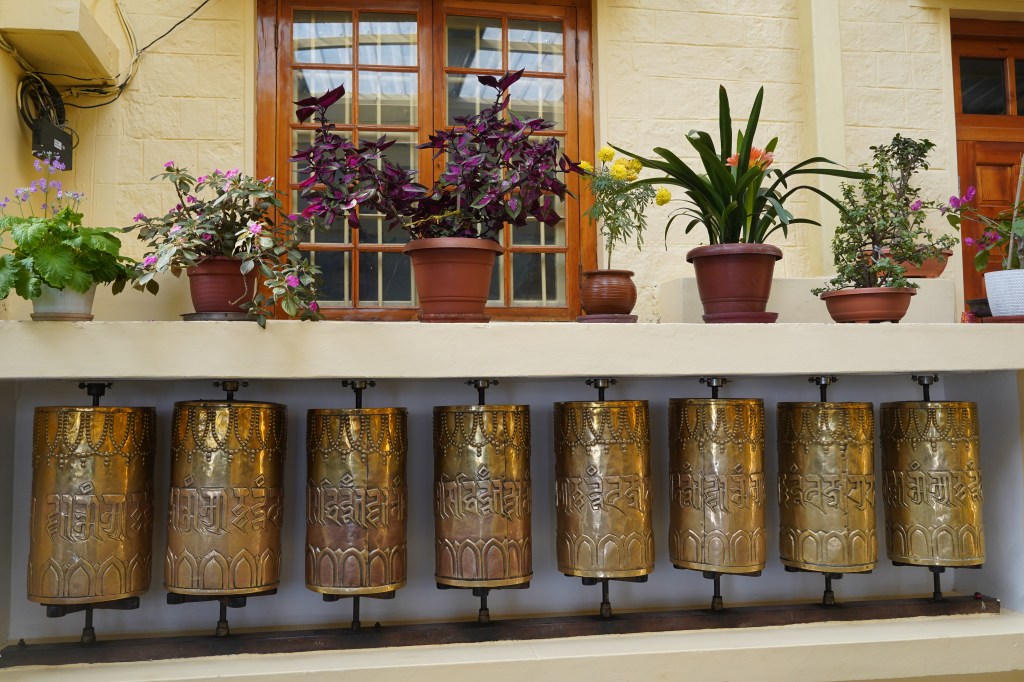
As we walked into the main temple, I saw a monk sitting on a cushion right next to the large statue of Buddha. The monk saw the camera around my neck and indicated to me that photography was not allowed. My description of the prayer hall is mostly based on my “photographic” memory 🙂 and my online research. The walls of the hall were adorned several Thangka paintings and there was scent of incense sticks in the air. There was a woman sitting on a cushion in front of the statue of Avalokiteśvara (the bhodisattva of compassion) deep in prayer. Chants of Om Mani Padme Hum could be heard in the background. This is the primary mantra of Tibetan Buddhism and is associated with Avalokitesvara. It is believed to encapsulate the essence of all Buddhist teachings, promoting compassion and wisdom– We walked around to the prayer wheels that were located on the outer wall of the temple. We spun the wheels while chanting the Buddhist prayer…. Om Mani Padme Hum (The Jewel in the Lotus). Prayer wheels are another key aspect of all Buddhist temples. These wheels are cylindrical devices that contain holy scrolls of Buddhist scriptures inside which are spun in a clockwise direction to generate merit and blessings.
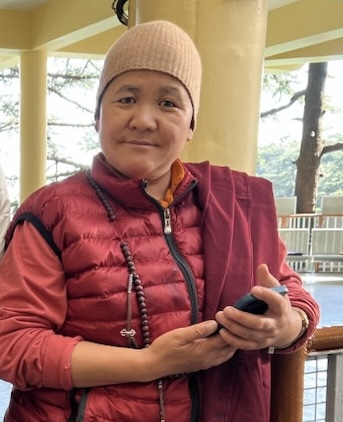
We sat down for a few minutes to moment of reflection, just observing various visitors and monks in the area. We spoke to one of the monks and she agreed to take a picture with us. She told us that the Dalai Lama participated in the prayer ceremonies three times a week and offered a sermon to all in attendance. We unfortunately missed an opportunity to see him as he is away in Bangalore at an event.
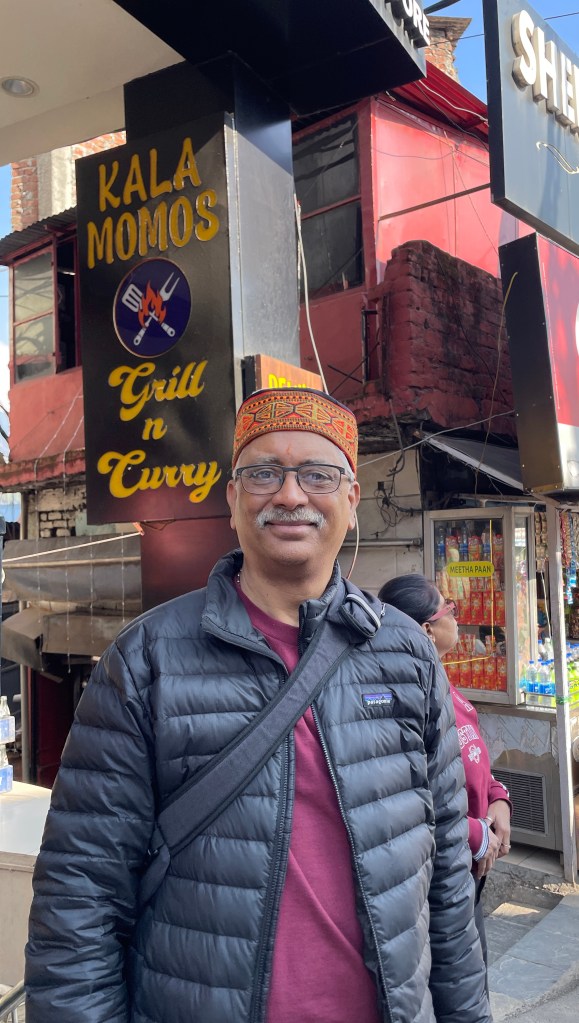
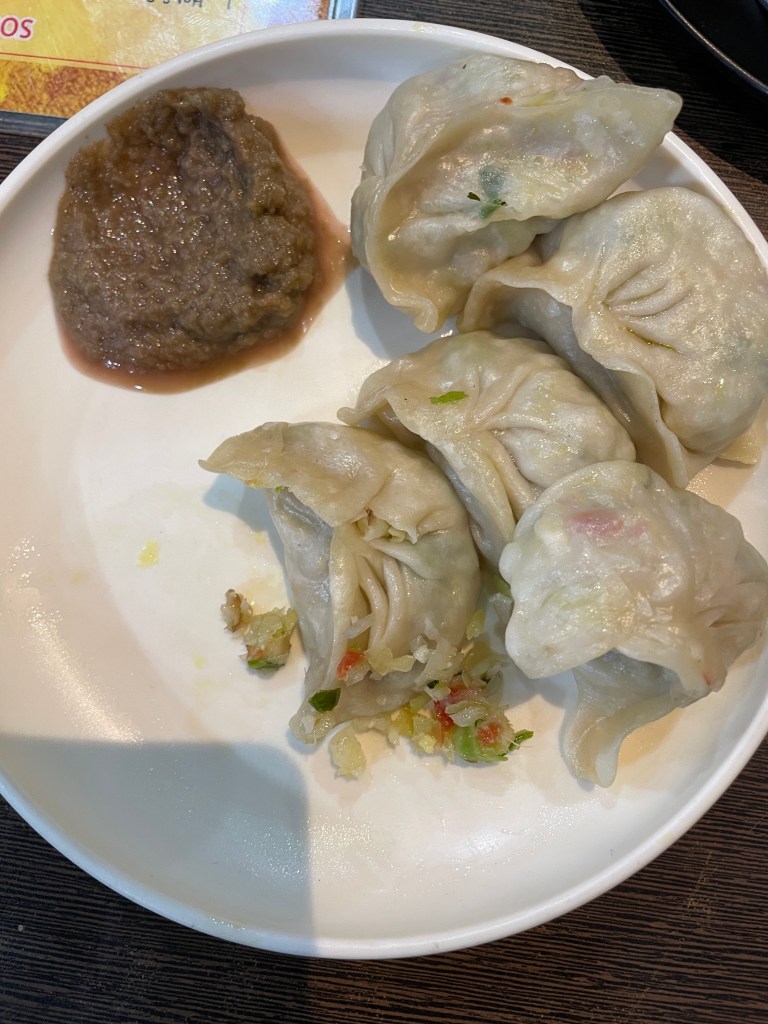
A visit to a tea plantation was next on the itinerary. As we were driving through the market area, we made a quick stop at Kala Momos to try out some Momos. The Momos lived up to the hype – they were amazing.
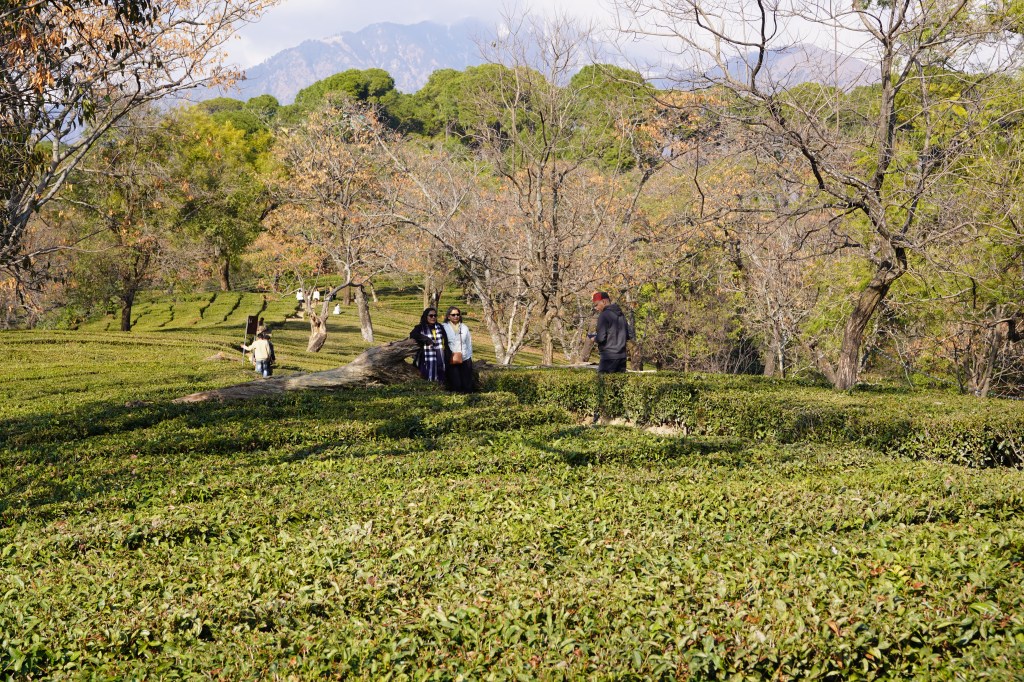
We arrived at the tea plantations of the Himalayan Tea Factory. We walked through the tea plantations and tried their Spice Tea Latte at the outlet. The guy at the store told us that Himachal Pradesh is not a very large tea producer, but they grow some premium quality teas here. After a couple of pictures and the Chai, we were on our way to our final stop for the day.


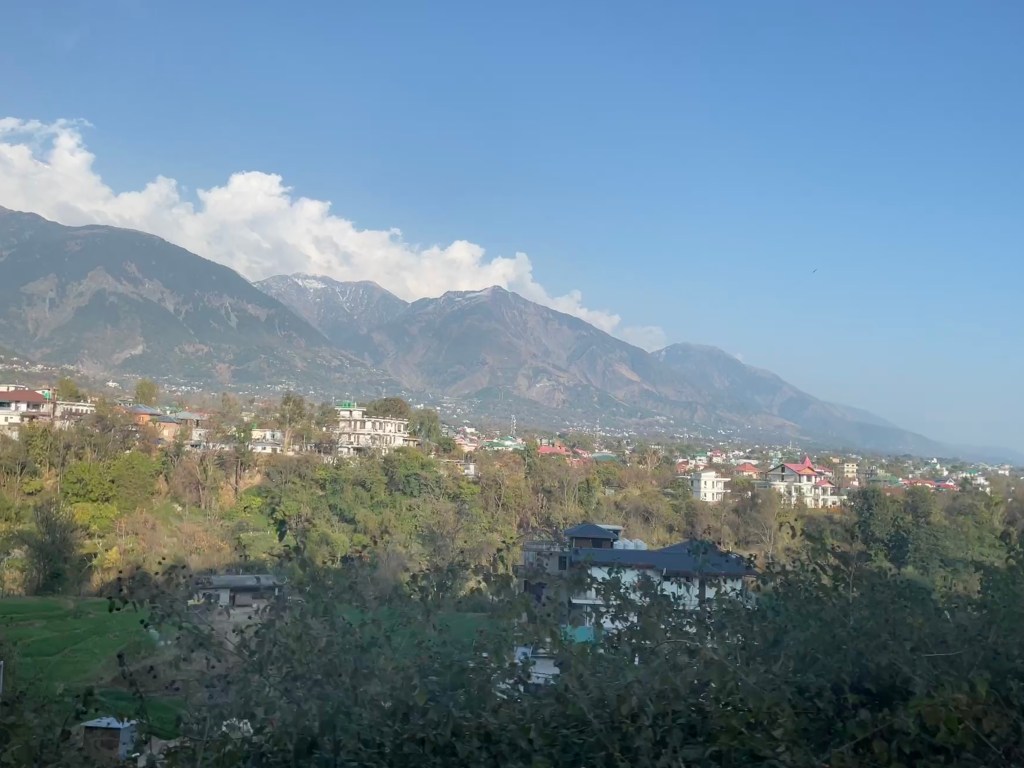
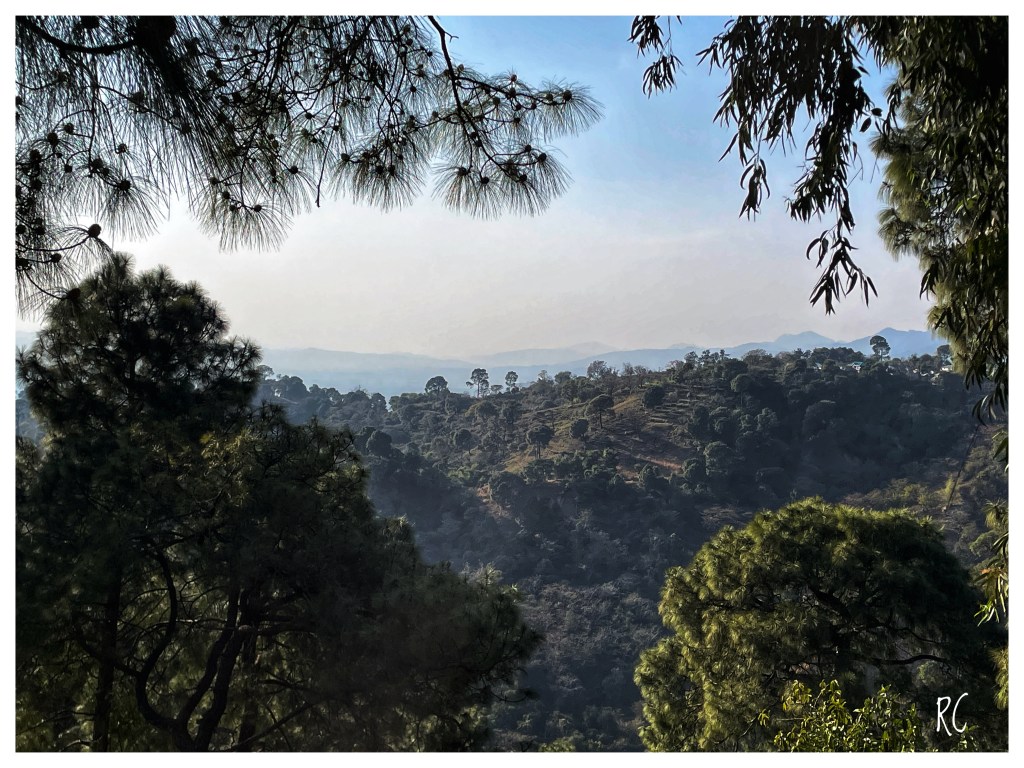
We went to the Shri Kunal Pathri Mandir – a small temple complex in the midst of the hills and the tea plantations. There is a very interesting story behind the origin of this temple. It is said that the stone in the temple always remains wet. As the legend goes, when the rock begins to dry, it starts raining. It is a lovely picture spot as well with a beautiful view of the mountains and the dense forests.
With this final stop, we wrapped our visit to Mcleodganj. We settled in for a quiet evening after a busy day of sightseeing and making some amazing memories.
We flew out on Day 3 from the Kangra Airport to Delhi. As you would expect, it is a very small airport, but the setting was very scenic.
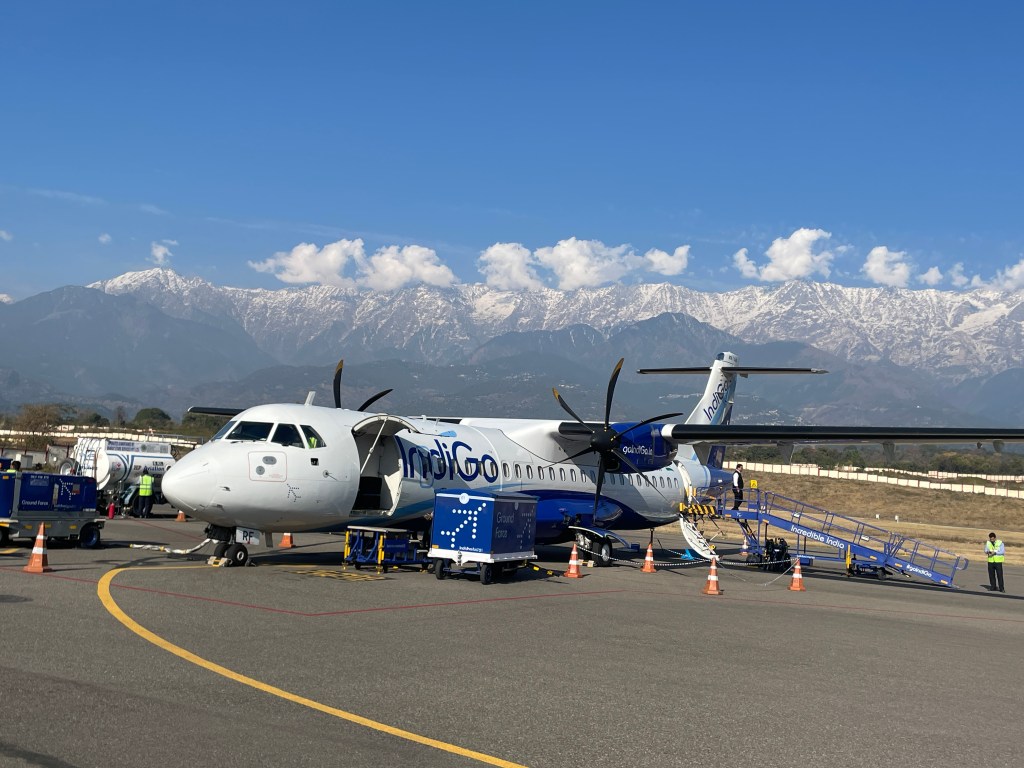
A superb visit to Dharmshala comes to an end… beautiful sights, spiritual experiences and we collected some blessings as well. .
Om Mani Padme Hum
 globalyatra