I have always been fascinated by this tradition Kolam in Chennai and other parts of south India. During the my recent visit to Chennai, I was on my morning walk and noticed the Kolams in front of many of the homes in the neighborhood. Some simple and others complex intricate designs. I observed women creating the Kolams mostly with rice flour, some with chalk on their driveway or on the street. I remembered my mother and my grandma making these Kolams during my growing up years.
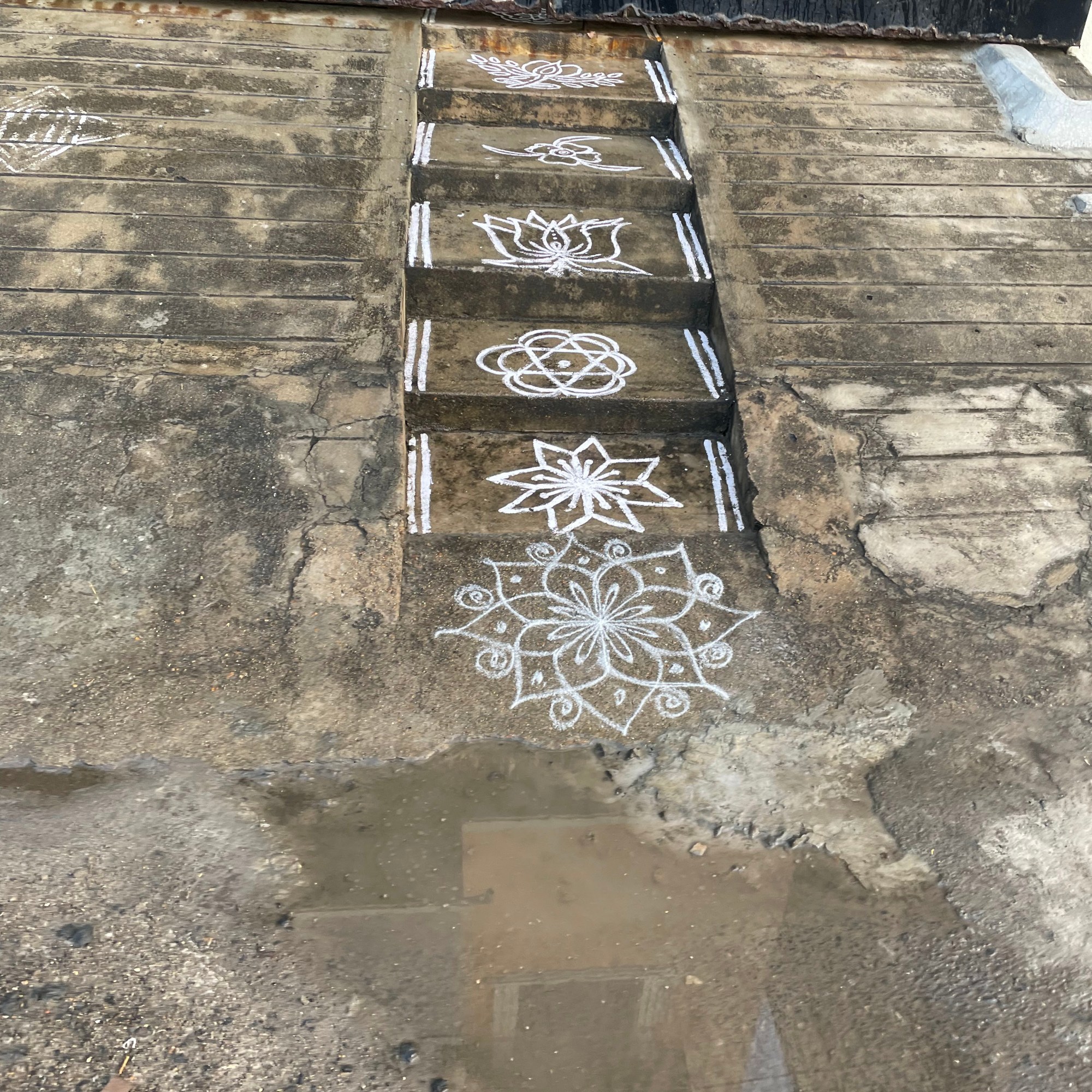
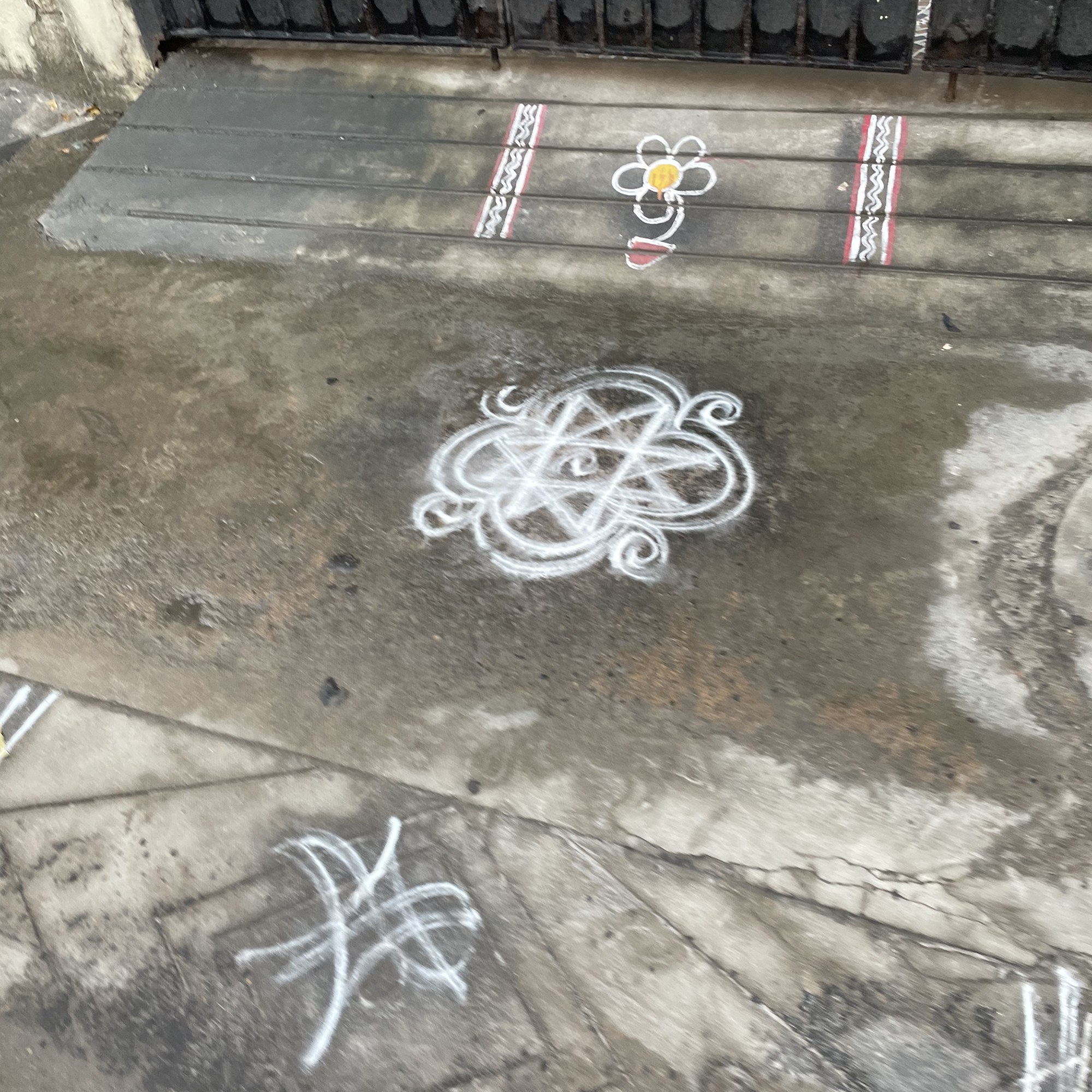

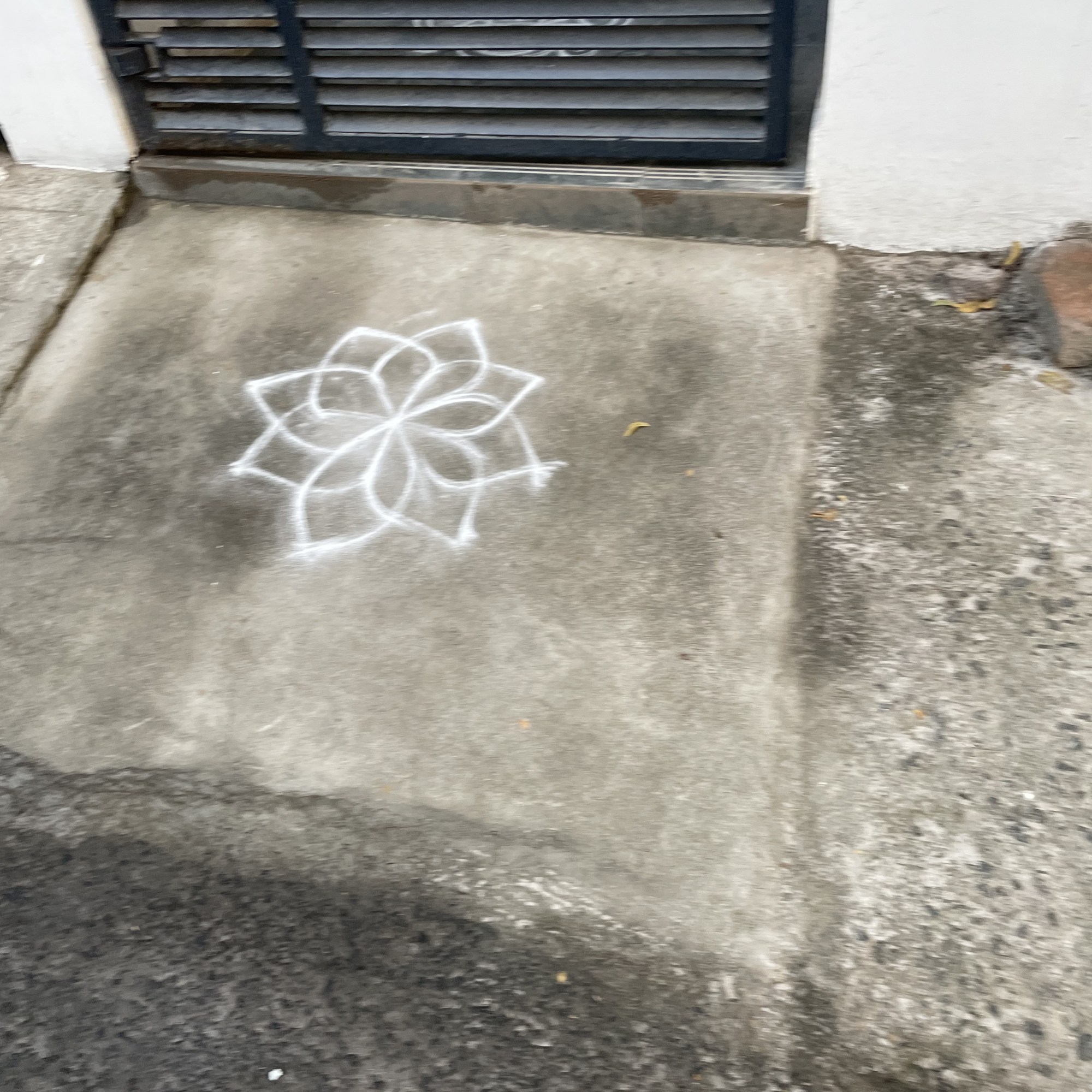
I was curious to learn about this amazing tradition that has been passed on from generation to generation. What is the significance of this tradition, I wondered ?? When did this start ? I did some reading on this and found lots of very interesting info on Kolam… the symbolism, significance and meaning to this tradition.
Kolam (Muggu in Telugu) according to Wikipedia has its origin in ancient Tamil Nadu and was known as Tamilakam. Its origins trace back to the Indus Valley civilization according to one Kolam researcher (yes, it is a field of research). The art form has since spread to other southern states and to states in the west of India such as Maharashtra and Goa as well. This art form is also called Rangoli in other parts of India and can be a very colorful creation. Pookalam is another form of the traditional Kolam where flowers are used to create colorful designs and arrangements
So why do people create Kolams ? People believe that Kolams are a way to ward off evil spirits and invite people to their homes. It is also away to invite guests to your home and invite goddess Lakshmi, the goddess of wealth and prosperity. Kolams are also said to ward off evil energies and spirits. It also symbolizes auspiciousness and good luck. There are others that believe that kolam symbolizes rebirth and regeneration, representing the cycle of life. Drawing a kolam is seen as a great physical exercise. When one bends their body to draw the kolam, their back bone is bent in a yoga like posture. This is believed to strengthen the back bone and exercise the waist and hip as well.
Kolams are usually drawn at the break of dawn. The process starts with a cleaning of area in front of the house with a broom and then water is sprinkled around the cleaned area. The woman ( or man) drawing the kolam then make a dots (pullis in Tamil) structure on the ground with rice flour. Women very deftly join these dots ( pullis) with straight and curves lines to make these simple and sometimes very intricate designs. Single Stroke kolam also called as “ANTHATHI Kolam” in Tamil Nadu. The Smooth line starts at a point and end in the same point. Single stroke kolam can be drawn for any type of dot structure (rhombic, square, triangular, or free shapes)
My wife provided another perspective to Kolams and the use of rice powder for making them. She mentioned that using natural materials was not only eco-friendly and a way of feeding ants and insects. The Kolams outside the house, on the front porch with rice flour kept ants and insects away from coming into the house looking for food.
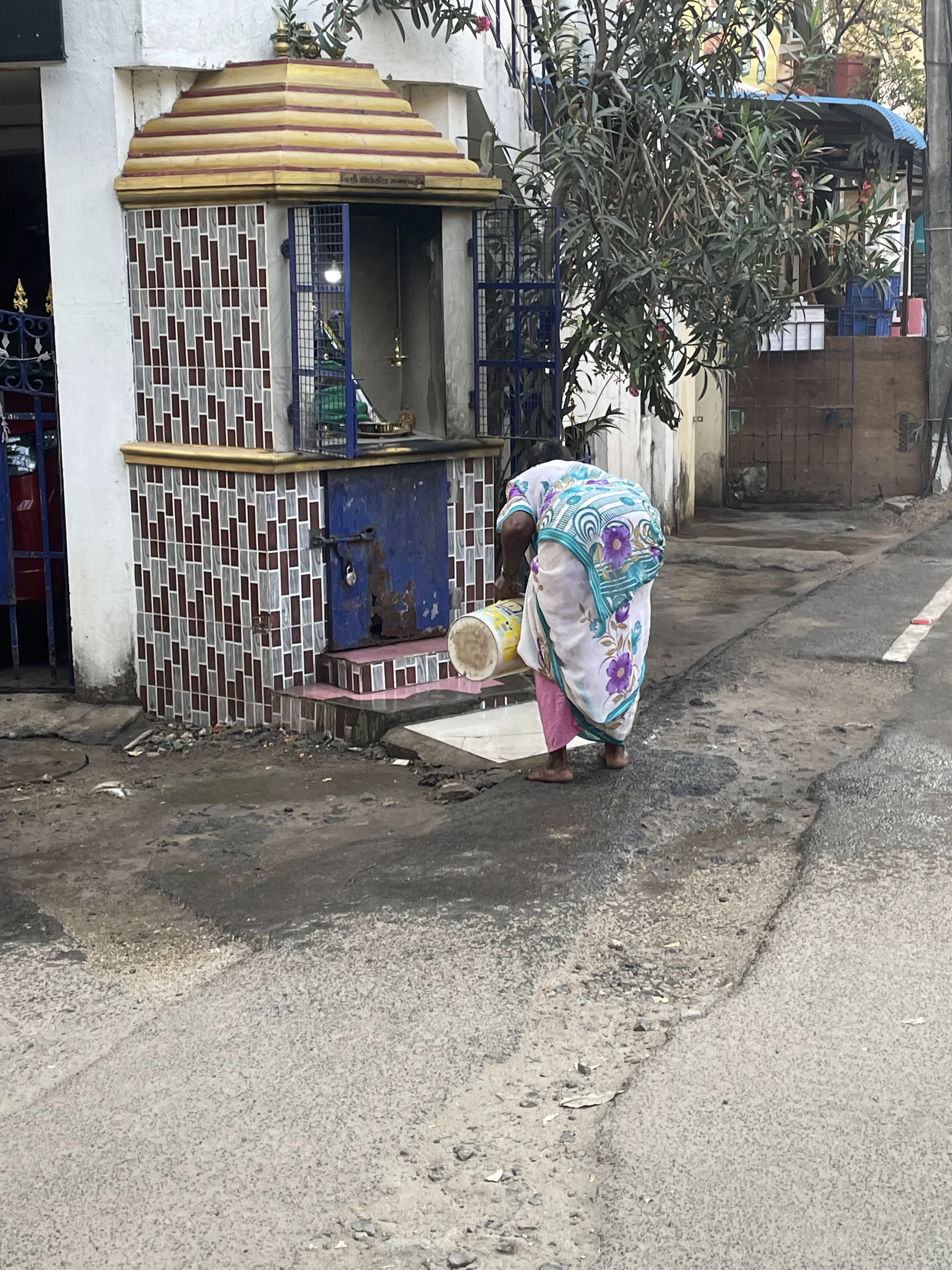
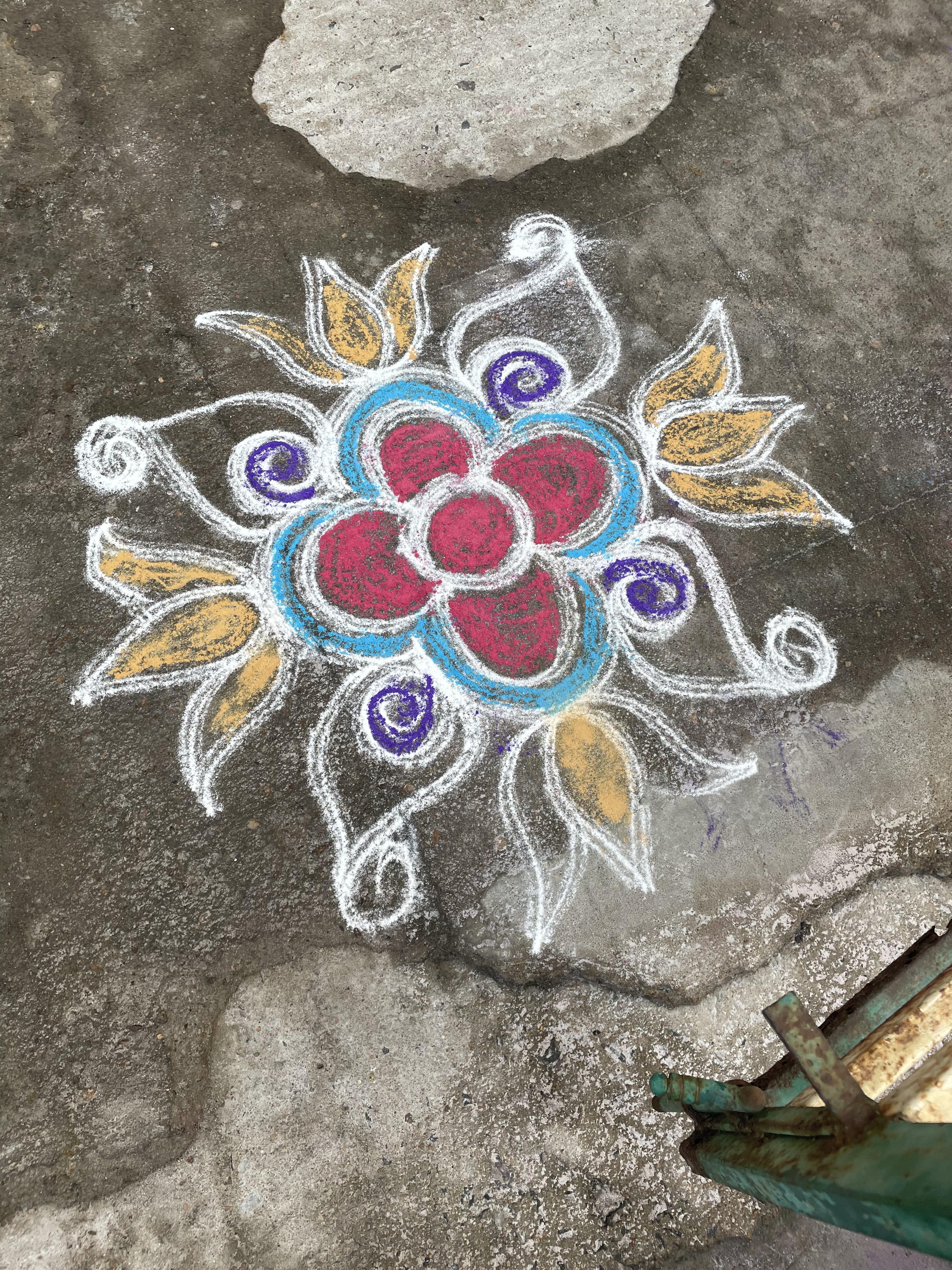
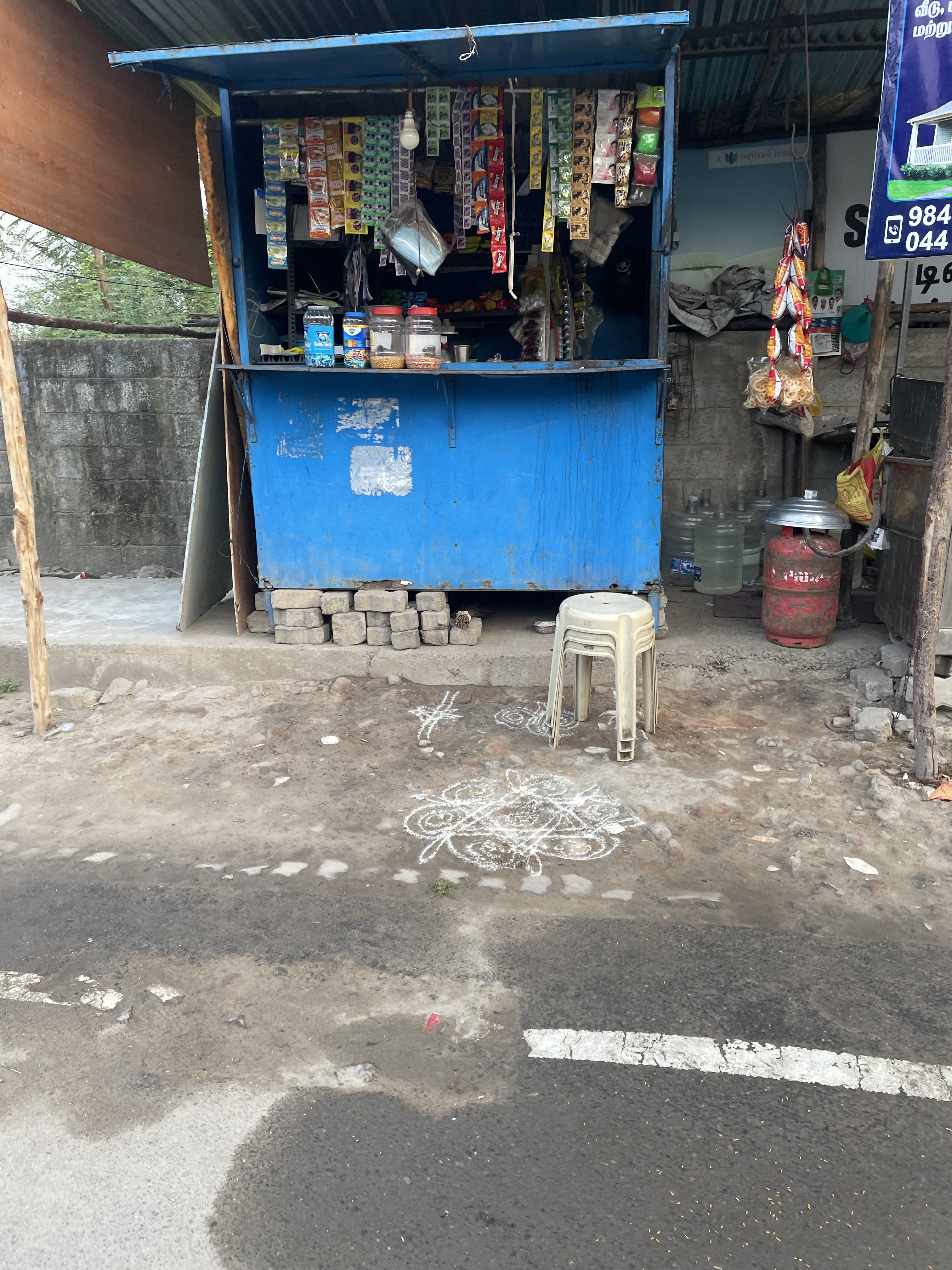
As I read more about this art form, I came across many many blogs and articles. I liked this blog written by Ahilya on the pages of The Auroville Adventure. The blog is called the “Magic of Kolams”… ( https://adventure.auroville.com/index.php/2021/03/29/the-magic-of-kolams). Lovely read.
I found another very interesting perspective to Kolams on a Mathematics related website. Imaginary.org is a non-profit for the communication of modern math. Brunda Alagarsamy writes in an article on Imaginary.org describing Kolam as a way of expressing mathematical ideas. She referred to drawing Kolams as an “ethnomathematical” activity.
While discussing this topic and my blog with friend, she shared another article that she had recently read on Kolams. The article entitled “Kolam, Beyond the Aesthetics” written by Smt. Shanti Chandrasekar talks about similar themes that I found in my reading. She writes “Kolams are steeped in philosophy and life lessons. The dots represent challenges in life and if one can weave their way around them and get back to the starting point, while still maintaining some kind of symmetry, they could deal with life’s ups and downs.” That’s pretty profound and deep…
Little did I know that a simple Kolam had so much significance… Yoga &exercise, ethnomatematical activity, cycle of life, warding off evil spirits, eco-friendly, linking body and mind… wow !
Next time you see a Kolam or may be draw one, hope you will look at it differently and appreciate the tradition a little more, I certainly will..
 globalyatra
Interesting read on Kolams. I have been getting to know about them after moving to Chennai.
LikeLike